In Valor and Memory:
Morris Soldiers Who Gave All

Samuel Bodian was born on January 10, 1914, in Waterbury, Connecticut, to Benjamin Bodian and Rebecca Horinbein. By 1920, he was living with his four brothers on a farm in Plymouth. Samuel completed his education through the eighth grade and, by 1930, was working as a sales clerk in a hardware store.
On September 16, 1940, he married Mildred Schnell in Torrington, and the couple settled on Camp Washington Road in the Lakeside section of Morris. Samuel worked for Howard Bissell in Bantam during this time.
He enlisted in the U.S. Army on September 24, 1943, serving as a private in the 36th Armored Infantry Regiment of the 3rd Armored Division. On September 6, 1944—just days before the liberation of the city—Samuel was killed in action in Liège, Belgium, at the age of 30.
Belgium had been under German occupation since May 1940. The capture of Liège by Allied forces was a key moment, allowing them to cross the Meuse River and push toward the German border near Aachen. Samuel gave his life in the final stages of this advance.
He is buried in the Henri-Chapelle American Cemetery and Memorial in Liège,
Belgium. This 57-acre cemetery is the resting place of 7,987 American soldiers, most of whom died during the U.S. Army’s advance into Germany.
William “Billy” Weik Jr. was born on November 13, 1919, to Laura Stoddard Weik and William Charles Weik. He grew up on the family farm alongside his two younger sisters, Shirley and Ruth, and his younger brother, Richard.
Billy attended the Lakeside School House and James Morris School before graduating from Litchfield High School—there weren’t enough students in his grade to graduate from Morris. He went on to study at Vermont Agricultural College from 1937 to 1938 and afterward returned home to continue working on the family farm.
On December 3, 1942, Billy was drafted into the United States Army. He reported first to Fort Devens and then to Camp Gruber near Muskogee, Oklahoma, arriving on December 10. Except for a high school trip to Washington, D.C., Billy had never been outside New England. Training was rigorous and relentless—marching, squad drills, digging foxholes, compass navigation, bayonet practice, KP duty, and weapons training kept him on his toes.
On April 18, 1943, Camp Gruber held a grand parade in honor of President Franklin D. Roosevelt. After the parade, the President joined a group of enlisted men for supper and remarked that he wished he could eat as well in the White House. Billy couldn’t help but wonder what the President usually ate.

Billy completed basic training on May 22, 1943, and became Private First Class William Weik Jr., Company I, 350th Regiment, 88th Infantry Division, U.S. Army. After a short furlough home, he resumed training. That November, he was assigned as the third man on a Browning Automatic Rifle (BAR) team—he carried an M-1 rifle and BAR ammunition.
On November 12, 1943—just one day before his 24th birthday—Billy wrote home: “I will be 24 years old. Getting old.” Sadly, he could not have known that he would never grow old.
In early December 1943, Billy set sail for Africa aboard a Liberty ship on a three-week journey across the Atlantic, the beginning of his path to the Italian front. By February 20, 1944, he was in Naples and soon found himself at the front lines near Minturno along the Gustav Line.
On May 11, Allied forces launched a massive assault across the entire Gustav Line. It marked the start of Billy’s long and brutal campaign across Italy—weeks of fighting, marching, and survival.In mid-October, Billy’s unit engaged in the fierce Battle of Mt. Battaglia, north of Florence. Between October 10 and 15, the 88th Division suffered 2,491 casualties. On October 12, 1944—just a month shy of his 25th birthday—Billy was among them. While the exact details of his death remain unknown, what we do know is that he had endured 113 days on the front line.
Billy was initially buried in the American Cemetery south of Florence. At his mother’s request, his remains were later brought home and laid to rest in Lakeside Cemetery.
William Weik Jr. once said he hoped to be remembered as a good farmer. He will forever be remembered as a good soldier.
Acknowledgment: “Billy’s War” by Shirley Weik and Ruth Weik Bemis
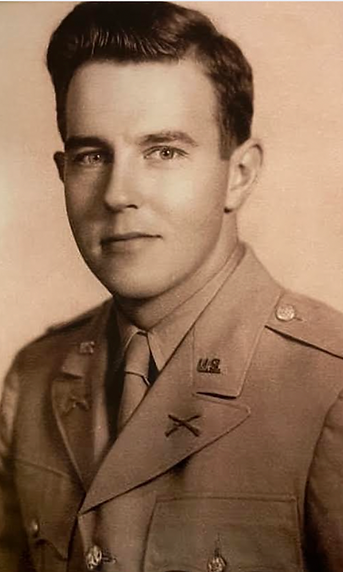
Rollin W. Skilton was born on March 9, 1924, to Elton and Lillian Skilton. He grew up with his two brothers, Donald and Fletcher, in a house just north of the firehouse—a building that no longer stands. His parents owned the general store across from Town Hall, located in a building that has since been relocated and now houses a package store.
Rollin attended school in James Morris and graduated from James Morris High School. After spending a year at New Britain Teachers College, he earned an appointment to the United States Military Academy at West Point, graduating with the Class of 1946. Upon graduation, he was commissioned as a Second Lieutenant in the Infantry.
When the Korean War began, Lt. Skilton served as a platoon leader in Company L, 3rd Battalion, 31st Infantry Regiment, 7th Infantry Division.
One of the most grueling and pivotal engagements of the Korean War was the Battle of the Chosin Reservoir. On November 27, 1950, Chinese forces launched a surprise attack on United Nations troops in the Chosin area. Over the next 17 days, 30,000 UN troops found themselves surrounded by more than 120,000 Chinese
soldiers. With nighttime temperatures plunging to 25 degrees below zero and daytime temperatures barely rising above zero, the extreme cold led to frostbite, frozen equipment, treacherous roads, and relentless suffering. The battle ultimately left 17,000 UN soldiers killed, wounded, missing, or dead from their wounds.
On December 6, 1950, during the breakout from Chosin, Lt. Skilton was gravely wounded while helping lead the withdrawal of his unit. Despite his injuries, he placed himself on a litter, which was loaded onto a vehicle. Tragically, he died shortly afterward from his wounds and exposure to the harsh elements. His body was brought to Koto-ri and interred in a mass grave dug by U.S. Marines.
In 1955, Rollin’s remains were recovered and identified by his West Point class ring. He was returned home and laid to rest on April 16, 1955, in East Morris Cemetery. He was survived by his wife, daughter, parents, and two brothers.
According to West Point, Lt. Rollin Skilton “performed his duty in an exemplary manner. His honor was one of the attributes that endeared him to his men. He did not have to ask what he could do for his country—he knew.”
Lt. Rollin W. Skilton made the supreme sacrifice during one of the most heroic and storied battles in military history.
Acknowledgment: West Point
Peter Clark Towne was born in February 1938. By the age of two, he was living in Ridgefield, Connecticut, with his father William, mother Margaret, and sister Judith. In 1950, the family had moved to Morris, Connecticut, where Peter lived with his parents and siblings.
He attended James Morris School and later enrolled at Wamogo High School when the Region 6 school system was established. Peter graduated with the Wamogo High School Class of 1957.
In May 1959, Peter married Ann McConnell in Jersey City, New Jersey. Together they had four children.
Peter proudly served in the United States Marine Corps as a rifleman and drill instructor for seven years. He served with honor in Vietnam, where he was tragically killed in action on August 18, 1965, at the age of 27, due to an explosive device. He died in Quang Tin Province, South Vietnam—a major battleground during the war and a known Viet Cong stronghold that saw intense fighting and numerous U.S. military operations.
Peter is laid to rest at West Cemetery in Litchfield, Connecticut. His name is inscribed on the Vietnam Veterans Memorial in Washington, D.C., on Panel 2E, Line 62.
